Maritime VR safety training
Virtual reality is most useful when it gives trainees access to spaces, hazards or procedures that are difficult to repeat safely. The value comes from guided practice, not novelty.
At Wuhan Erun Technology Co., Ltd., ERUN approaches this topic as a practical simulator-design question: how to connect maritime scenarios, instructor workflow and measurable trainee behaviour in one usable training environment.
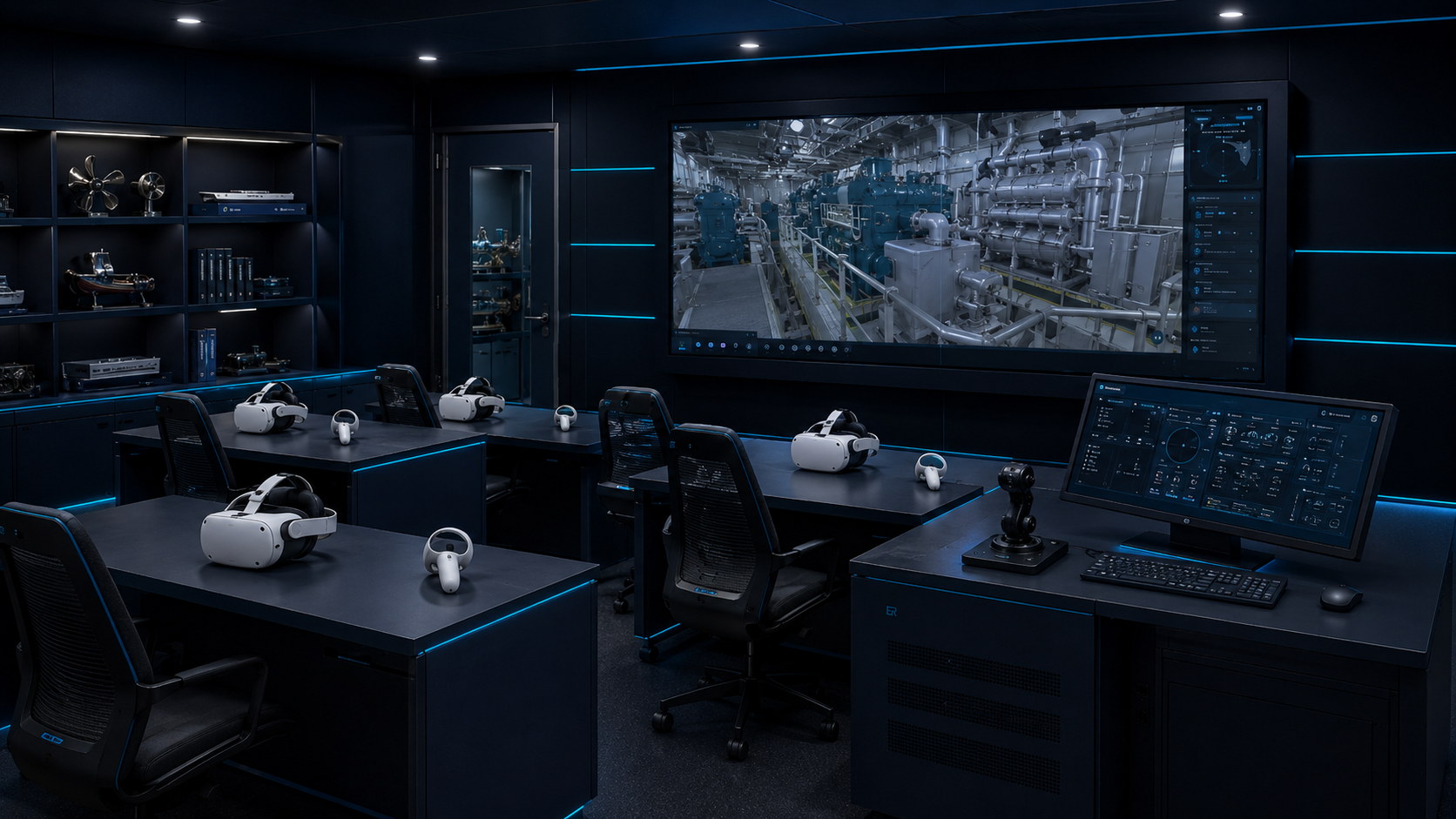
What the programme should cover
- Use VR for machinery-space familiarisation and hazard awareness
- Build emergency routes and equipment checks into clear tasks
- Combine headset practice with instructor observation and scoring
- Keep scenarios short enough for rotation and repeat practice
ERUN perspective
ERUN designs simulator projects around instructor control, repeatable scenarios, trainee workload and post-exercise debriefing. The goal is to make each exercise visible, measurable and useful for the next training decision.
VR should make safety procedures easier to practise, remember and verify.
Where it fits
This topic is relevant for maritime academies, ports, fleet training centres and organisations planning a simulator room, a specialist workstation lab or an integrated maritime training system.