Engine room fault scenario design
Engine room training is strongest when a fault develops over time and gives trainees enough evidence to diagnose the system. A good scenario should include early signs, alarm escalation, communication tasks and clear consequences for delayed action.
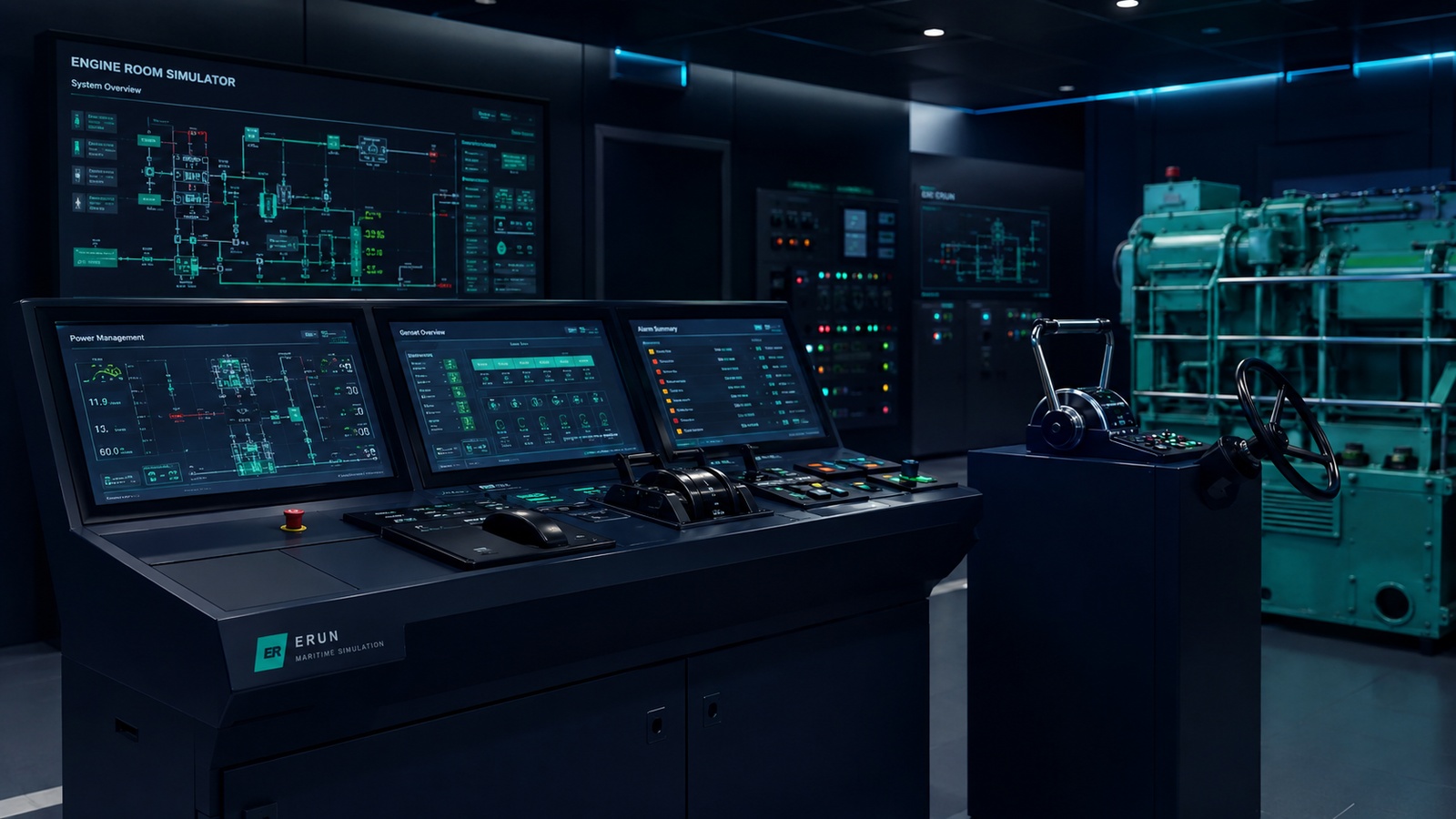
ERUN, developed by Wuhan Erun Technology Co., Ltd., uses this kind of training question to guide simulator configuration, from visual scenes and control logic to replay evidence and instructor decision support.
What the programme should cover
- Define the target competence before choosing the fault
- Use staged symptoms so learners practise trend recognition
- Record actions and timing for evidence-based feedback
- Repeat the same scenario with different team roles
ERUN perspective
ERUN designs simulator projects around instructor control, repeatable scenarios, trainee workload and post-exercise debriefing. The goal is to make each exercise visible, measurable and useful for the next training decision.
A well-designed fault scenario turns troubleshooting into a visible chain of reasoning.
Where it fits
This topic is relevant for maritime academies, ports, fleet training centres and organisations planning a simulator room, a specialist workstation lab or an integrated maritime training system.