Bridge simulator visual planning
A bridge simulator visual system should support the training decision, not simply look impressive. Field of view, projector or display layout, night scenes, traffic density and port approach detail all affect how trainees build situational awareness.
At Wuhan Erun Technology Co., Ltd., ERUN approaches this topic as a practical simulator-design question: how to connect maritime scenarios, instructor workflow and measurable trainee behaviour in one usable training environment.
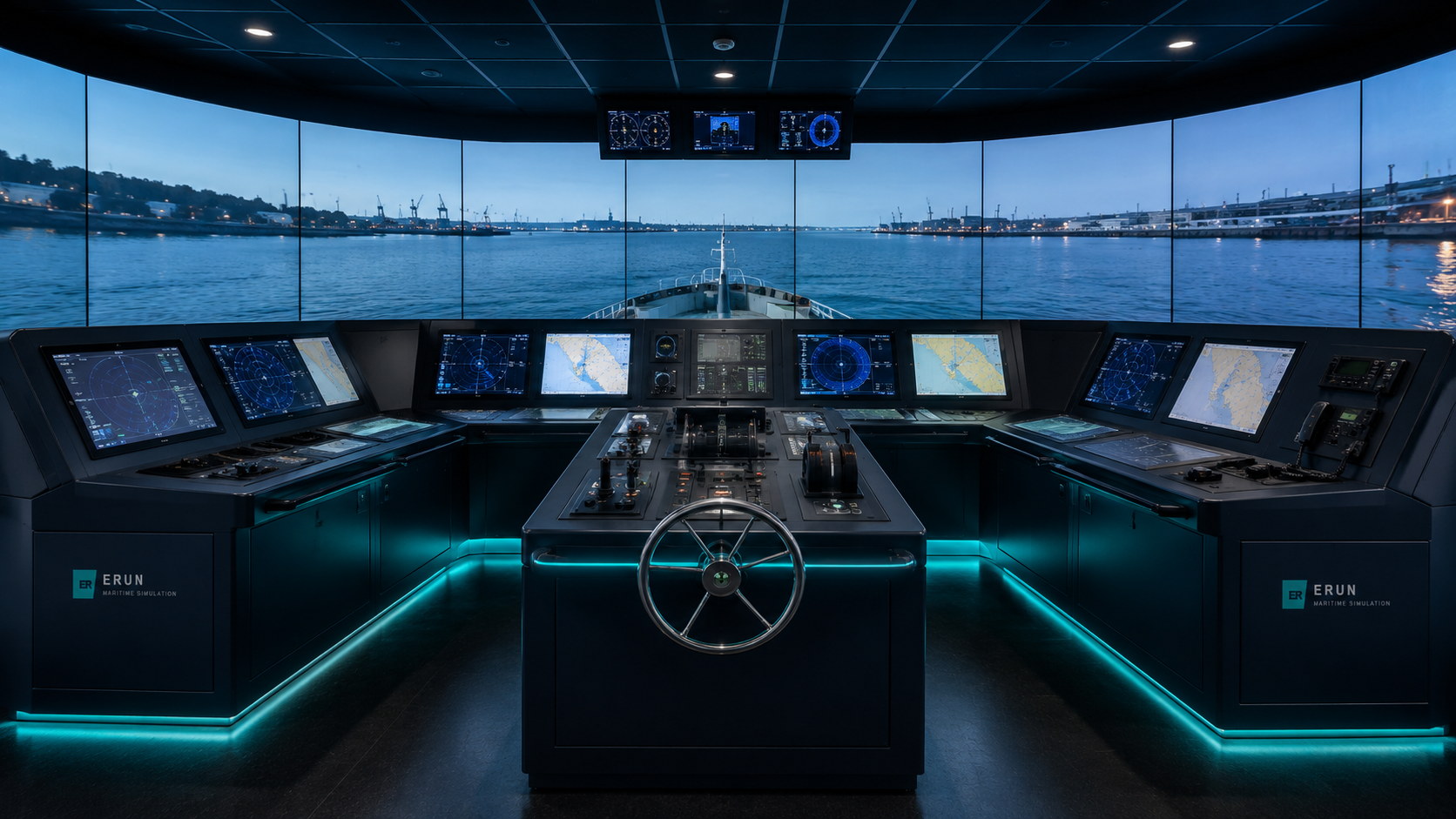
What the programme should cover
- Match visual coverage to BRM, pilotage and watchkeeping objectives
- Prepare port, coastal and restricted-water scenes around local training routes
- Balance visual immersion with room size, maintenance access and budget
- Keep instructor tools connected to the visual scenario timeline
ERUN perspective
ERUN designs simulator projects around instructor control, repeatable scenarios, trainee workload and post-exercise debriefing. The goal is to make each exercise visible, measurable and useful for the next training decision.
The best visual system helps trainees notice risk earlier and explain their decisions after the exercise.
Where it fits
This topic is relevant for maritime academies, ports, fleet training centres and organisations planning a simulator room, a specialist workstation lab or an integrated maritime training system.