Project context
The programme needed exercises that reflected river currents, limited manoeuvring room, bridge passages and local traffic patterns. Live practice alone could not provide enough repeatable scenarios.
ERUN project teams from Wuhan Erun Technology Co., Ltd. treat implementation as a complete readiness system: site planning, simulator configuration, scenario design, training records and lifecycle support must work together.
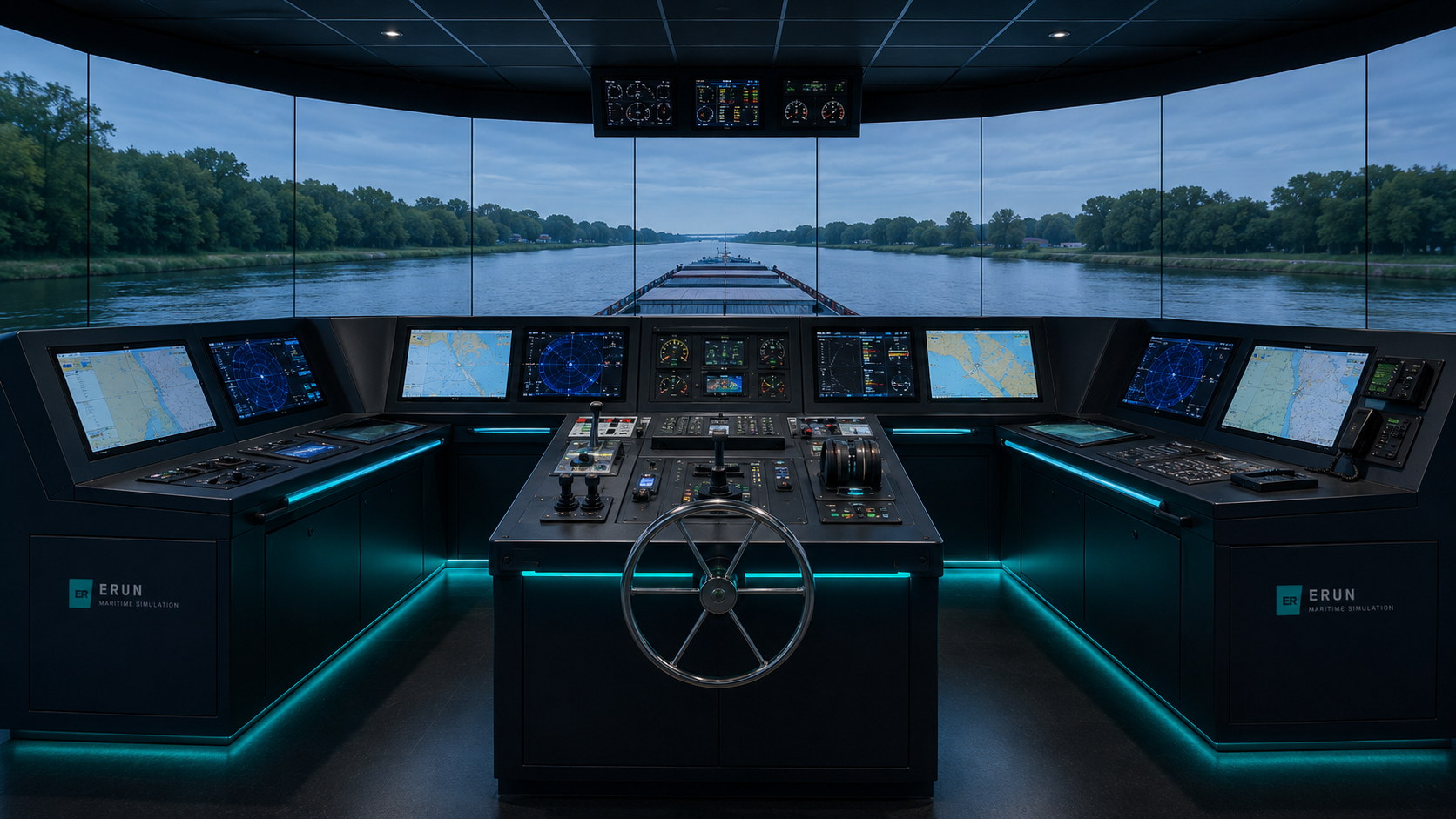
ERUN configuration
- Inland waterway scene database with restricted channels
- Instructor-controlled currents, visibility and vessel traffic
- Bridge team tasks for route execution and communication
- Debriefing records for manoeuvring and risk review
Implementation focus
The project plan connects room layout, simulator fidelity, instructor workflow and assessment evidence. ERUN keeps the configuration practical so the site can start with priority training goals and expand as operational requirements grow.
Simulation made local river hazards repeatable enough to teach systematically.
Training value
The result is a repeatable environment for briefing, scenario execution, monitoring, replay and improvement. Instructors can compare performance over time while trainees practise decisions before they face them in live operations.